Stage 04 · The Print
Dry down
Prints darken as they dry, which catches everybody once.
Entry 4 of 4 in The Print, the fourth of seven stages between the shutter and the shelf.
The print that lied in the darkroom
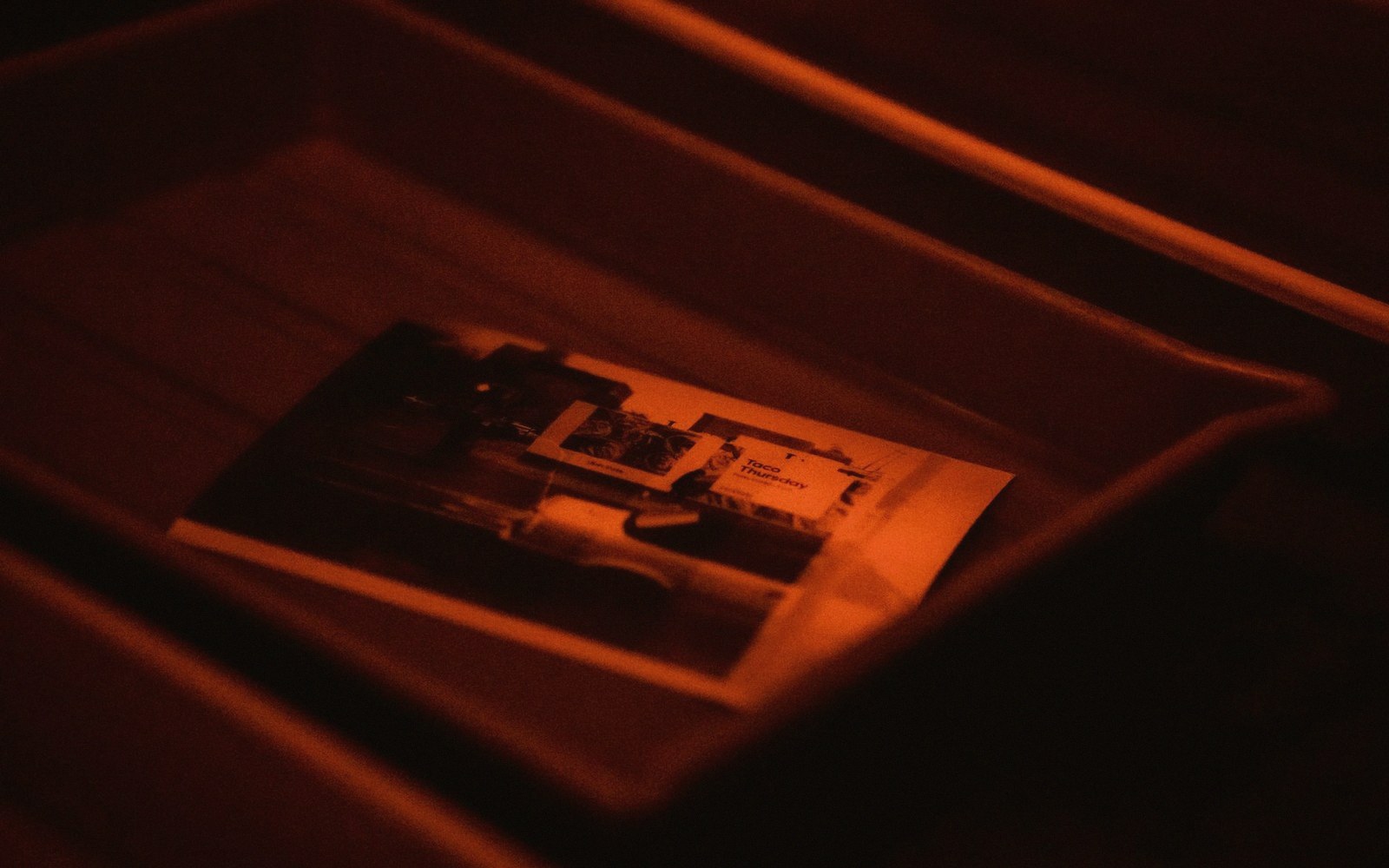
A wet fibre-based print looks lighter than it will when dry. The emulsion is still swollen with water, scattering light differently at the surface; once the print dries fully, density increases — sometimes by a noticeable fraction of a stop. Every printer working in silver gelatin learns this the hard way: a print pulled from the wash that looks exactly right will be too dark by morning.
The phenomenon is called dry down. It is not a fault, not a flaw in the chemistry, just the physics of a wet emulsion versus a dry one. The practical consequence is that a print that looks correctly exposed when wet is actually slightly overexposed. To compensate, experienced printers expose to a value they know reads as a touch light in the wash, trusting the dry result.
How much dry down to expect depends on the paper. Fibre-based papers dry down more noticeably than resin-coated ones, because the resin layer limits water absorption and the emulsion changes less between wet and dry states. Glossy surfaces tend to shift more than matte; a heavy fibre gloss can lose what feels like a quarter-stop of apparent brightness between the wash and the dry-mount press.
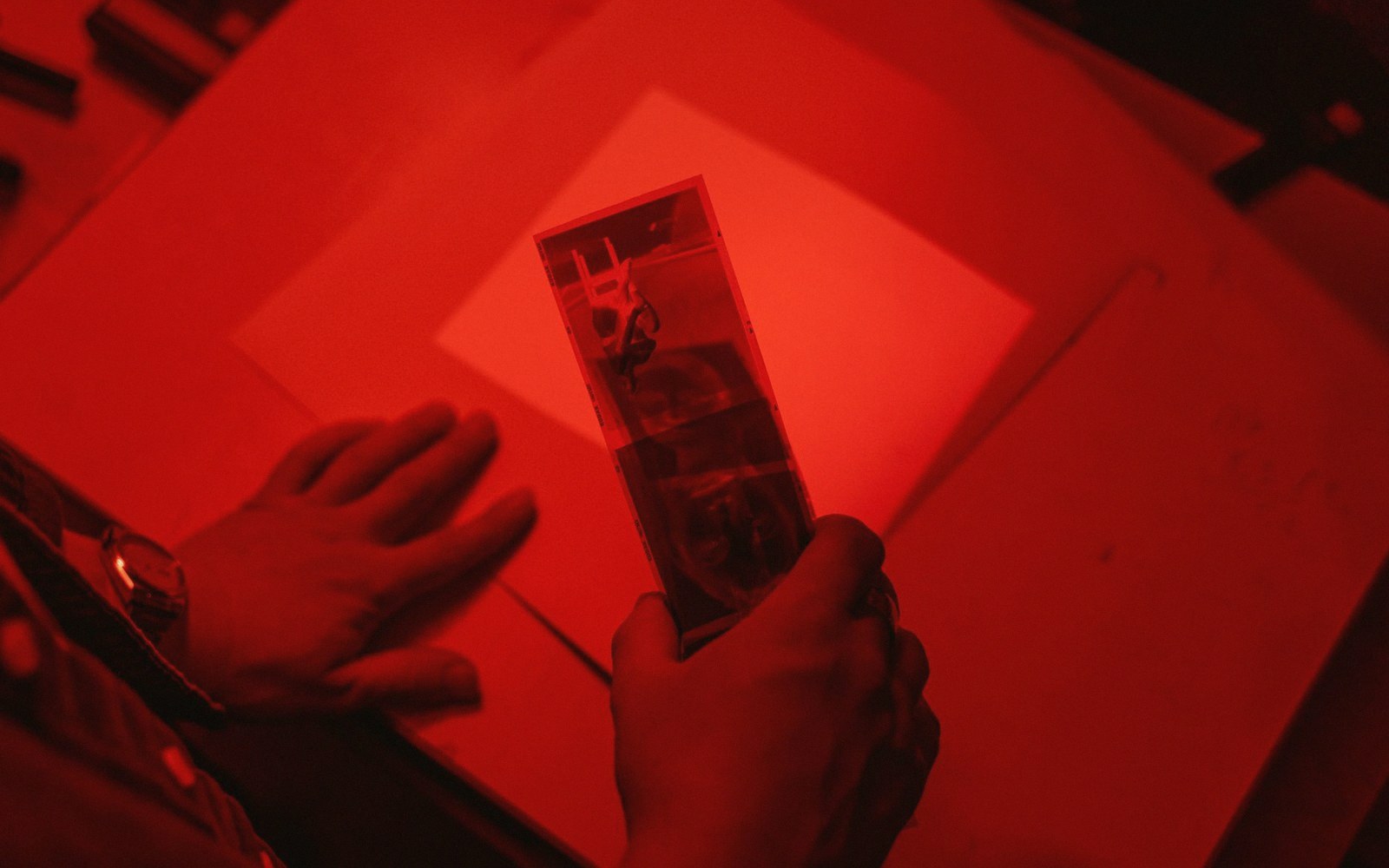
The solution is calibration, not guesswork. A printer who knows their paper and chemistry makes a test strip and lets it dry completely before drawing any conclusion. The dry strip becomes the reference. Matching future prints wet to a dry reference is the reliable method; matching wet to wet introduces the same error every time.
Digital printing sidesteps the problem almost entirely — an inkjet print reaches its final density within minutes — but the lesson survives: judge a print dry, never wet. In the darkroom, patience is part of the technique. Pulling a print from the wash and deciding it is finished is an expensive habit. The emulsion has not spoken yet.