Stage 04 · The Print
The test strip
Judging exposure by comparison rather than by measurement.
Entry 3 of 4 in The Print, the fourth of seven stages between the shutter and the shelf.

Judging exposure by comparison, not calculation
A test strip is a single sheet of paper, printed in steps — typically four or five bands of exposure across the same image area — so you can judge tone before committing a full sheet. It predates digital printing by several darkroom generations, but the logic survives: measurement tells you where to start; comparison tells you where to stop.
The method is simple. You expose one strip of paper to the image in timed increments — say, five seconds per band — then process it and read it in good light. Each band is a hypothesis. The one that holds the shadow detail without blocking up, and renders the highlights without washing out, becomes your working exposure. You are not calculating; you are looking.
That distinction matters more than it sounds. An exposure meter or a densitometer will give you a number, and the number will be close. But paper response is not linear, and what you perceive as correct tone depends on the image itself — the subject matter, the tonal distribution, the paper surface you are printing on. A matte paper's tonal floor sits higher than a gloss surface, which means the same negative printed on both needs a different exposure to read the same way. The strip shows you that. The meter does not.
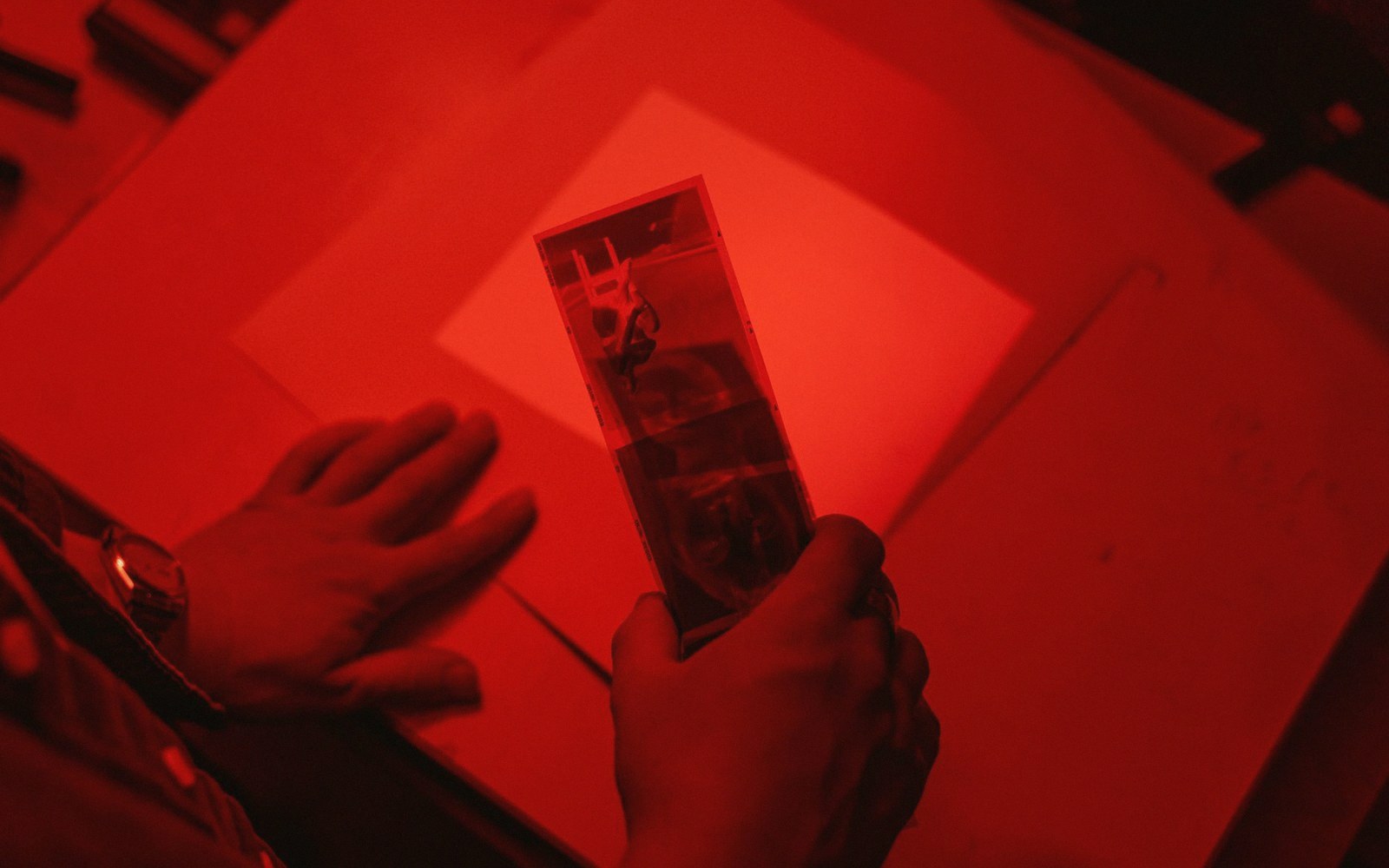
Digital printing inherited the concept almost intact. A calibrated test print — a row of exposure variants output on one sheet — works by identical logic. Some printers run gradient strips on the leading edge of a sheet before the image begins. The tool changed; the judgment did not.
One error recurs constantly: reading the strip dry while mentally comparing it to a wet print, or vice versa. Prints darken as they dry, and a strip that looks right in the developing tray will read heavier once it has dried flat. The correction is small but consistent, and once you have learned it on your paper, you carry it automatically.
The test strip is not a shortcut and not a precaution. It is the fastest route from a new negative to a known exposure — a comparison made once so the final sheet can be committed with confidence rather than hope.