Stage 05 · The Book
The dummy
A blank bound mock-up, made before anything is committed.
Entry 4 of 4 in The Book, the fifth of seven stages between the shutter and the shelf.
Before the final paper is chosen, before an edition is agreed, the physical argument has to be made by hand.
What the object is for
A dummy — the term is standard across book publishing and bookmaking — is a blank or semi-blank bound mock-up made before anything is committed to a print run. In photobook practice it serves one function above all others: it forces the sequence out of the screen and into the hands. No amount of time spent shuffling thumbnails in a layout application tells you whether the book is the right size, whether the gutter destroys the image you planned to run across the spine, whether the page-turn lands where the logic of the sequence demands.
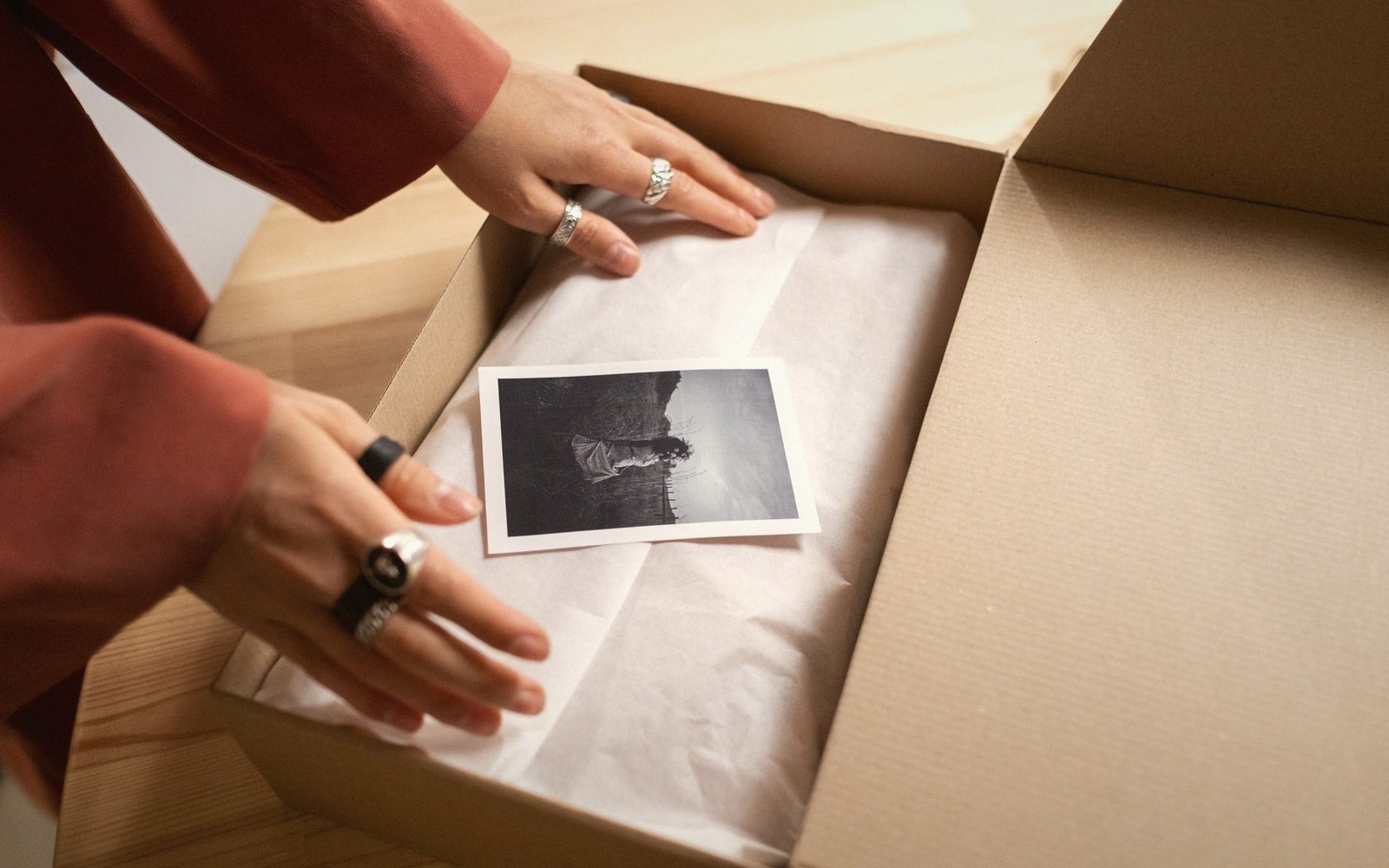
The dummy is usually made from the intended paper stock — or the nearest available substitute — cut and bound to the final trim size. Prints are placed into it, sometimes pasted, sometimes simply slipped between leaves. The point is not finish; the point is decision-making. Spine width follows from page count and paper bulk. If those numbers change, a new dummy is made. Photographers working seriously toward a book often make several, each one tighter than the last.
What it reveals
Working with a physical dummy exposes things a screen conceals: the weight of the object in the hand, the resistance of the paper as it turns, the proportion of the cover relative to the page area inside. A spread that read as balanced on a monitor may feel front-heavy when the book actually opens. A run of dark frames across multiple pages — invisible as thumbnails — becomes oppressive in the hand in a way that is immediately legible and immediately fixable.
The dummy is also where pace becomes physical rather than theoretical. Flipping through it at reading speed, you feel the density accumulate or release in a way no slideshow replicates. Edits that seemed finished regularly open back up at this stage. That is not failure; it is the dummy doing its job.
Make one before you talk to a printer, before you settle a page count, before you show anyone the sequence. The conversation is easier when the object exists.