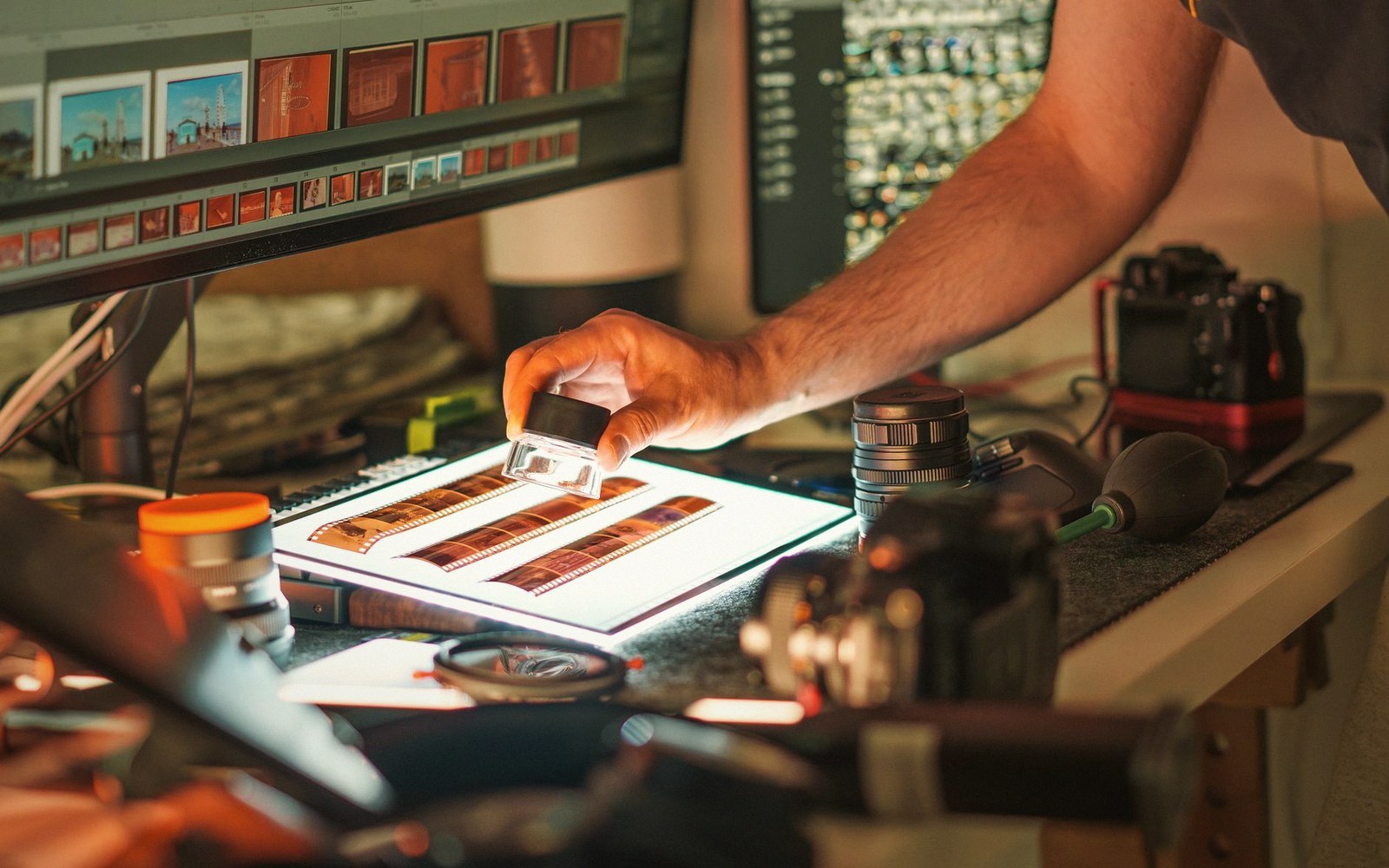
Stage 06 · The Archive
What to keep
Negatives, files and work prints age differently and need different rooms.
Entry 1 of 3 in The Archive, the sixth of seven stages between the shutter and the shelf.
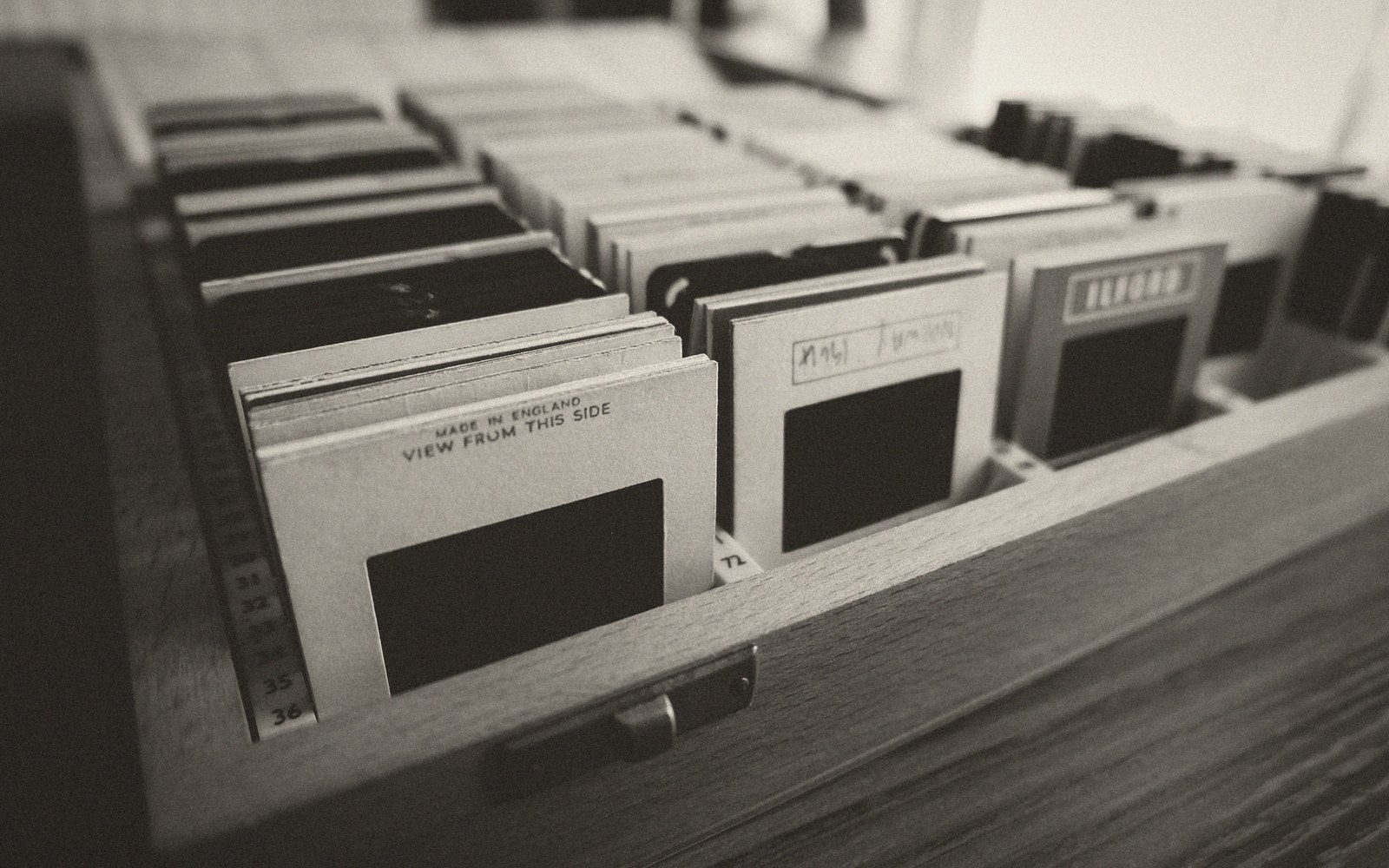
Every format fails on a different timeline
A negative, a RAW file and a work print are not three versions of the same thing. They are three different objects, each with its own deterioration curve, and treating them as interchangeable is the first mistake of archive thinking.
Silver gelatin negatives, stored correctly, can outlast the photographer's grandchildren. Colour negatives are less forgiving: the dye layers fade and shift at different rates, and chromogenic film from the 1970s and 1980s is already showing it. Colour slides are worse. Every generation of dye technology came with optimistic archival claims that the decades have quietly revised downward. The lesson is not that film is fragile — in black and white, it is remarkably stable — but that stability is conditional on environment, and environment costs attention.
Digital files fail differently: not slowly but suddenly, and often silently. A hard drive does not warn you before it dies. A magnetic tape format becomes unreadable not because the tape decays but because the machine that reads it is no longer made. The threat to a RAW file is less physical degradation than format obsolescence — the slow disappearance of the software that can parse it. TIFF and DNG sit better in a long archive than proprietary RAW formats, not because they are technically superior but because they are more likely to be readable in twenty years by something you have not bought yet.

Keep them apart and keep them cold
Temperature and humidity are the two variables you actually control, and they work on every format, just differently. Film wants cool and dry: the cooler the store, the slower the chemical processes that cause deterioration. A domestic freezer can extend the life of colour materials significantly, provided the film is sealed against moisture before freezing and equilibrated slowly when it comes out. A drawer in a warm office is not an archive; it is slow damage.
Digital storage wants the opposite of a single location. The principle is redundancy: at least one copy off-site, at least one on a medium checked regularly, and a calendar reminder to migrate everything before the format or the hardware becomes exotic. The failure mode of digital is not age — it is neglect.
Work prints occupy a third category. They are not the archive; they are evidence of process — the sheets marked in grease pencil, the contact sheet circled in chinagraph, the proof with a crop line drawn in ballpoint. These age on paper time, which is long for fibre-based and shorter for resin-coated. They are also the objects most likely to be thrown away when a studio is cleared, and that is genuinely a loss. A marked-up contact sheet is a document of decision-making that no file metadata can replicate.
What actually warrants keeping
Not everything. This is the harder question, and the one photographers usually defer until a hard drive fills or a box becomes unmanageable. A working principle: keep the full take in its raw form, because culling a negative archive is irreversible and your edit will not look the same to you in ten years. Keep the selects as a separate, clearly labelled layer above the full take — not a replacement for it. Keep any print that was made for exhibition, publication or a specific purpose, sleeved individually and logged. And keep the rejects that are genuinely interesting failures, because interesting failures are research.
What you do not need to keep: multiple derivative exports at different sizes, speculative prints made to test a paper you did not like, duplicates created by disorganised workflow. These accumulate silently and make the real archive harder to navigate. An archive you cannot search is just storage — and storage without structure is where work goes to disappear.
The goal is not to keep everything. The goal is to keep the right things in conditions that mean they will still be there, and still be usable, when you return to them.