Stage 05 · The Book
The page turn
The reader controls the pace, and the turn is the only cut the maker fully owns.
Entry 2 of 4 in The Book, the fifth of seven stages between the shutter and the shelf.
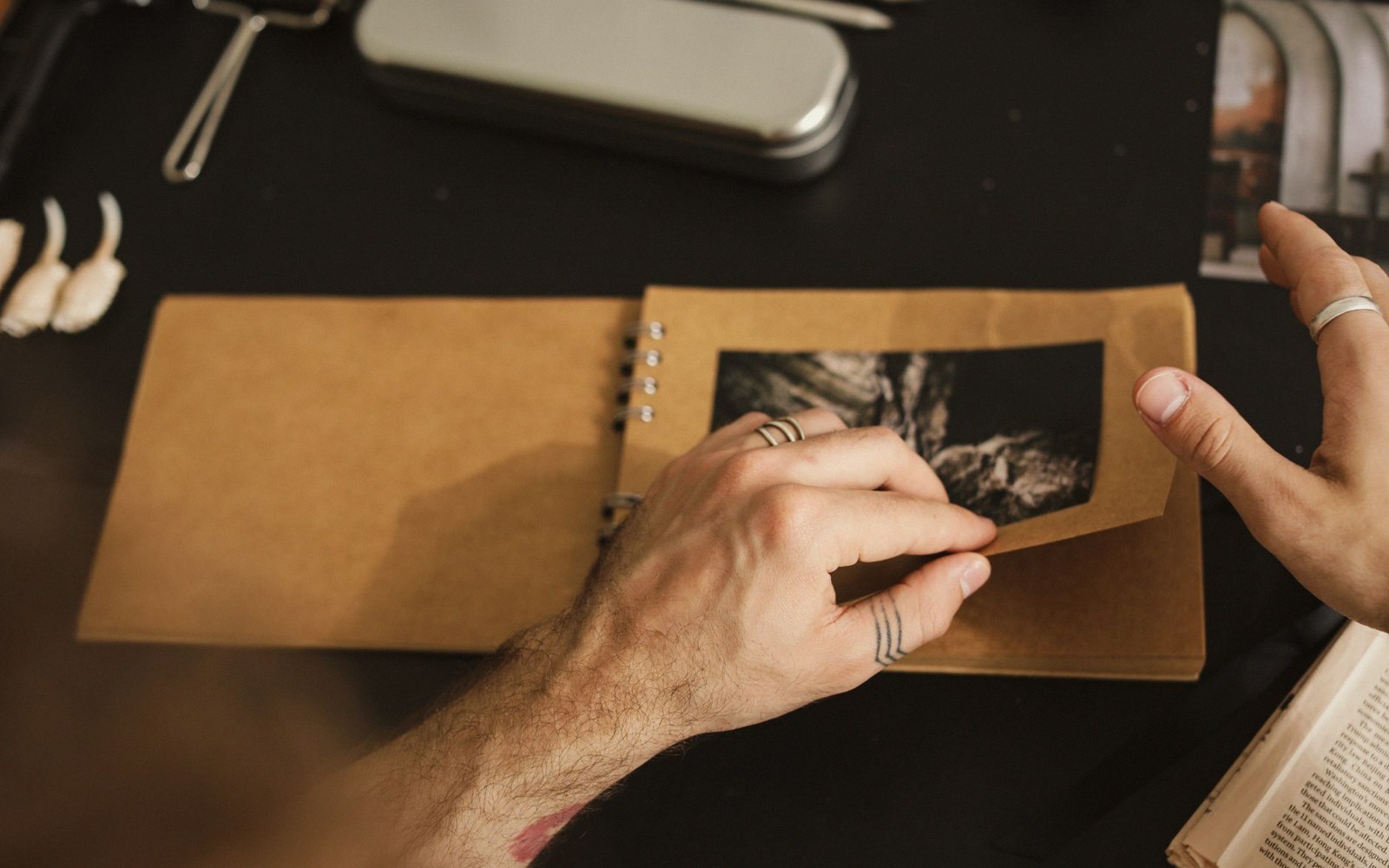
In film, the cut belongs to the editor. In a photobook, the only hard pause the maker truly controls is the one the reader makes with their own hands.
The mechanics of anticipation
A screen scrolls. A gallery wall is taken in at a glance, the eye moving freely across the room, deciding its own order. A book is different. The reader holds the object, turns from one state to the next, and the maker — for once — owns that beat completely. The page turn is the one cut in a photobook that cannot be skipped, hurried or approached from a different angle. It is mandatory.
This matters because it creates anticipation as a structural tool. Whatever sits on the right-hand page of a spread is visible before the turn; whatever waits on the left-hand page of the next spread is hidden until the reader commits. That asymmetry is not a limitation — it is the medium's central mechanism. The maker who understands it thinks in terms of what is withheld as much as what is shown. A sequence of revelations can be built entirely around that rhythm, one concealed image at a time.
The crucial decision, then, is what to put last on the right. A photograph that generates a strong question — where is this, what happens next, who is absent from this frame — will carry a reader through the turn with genuine momentum. A photograph that answers its own question too completely sits there inert. The book stalls, and the reader puts it down for the evening.
Weight on each side of the fold
A spread is not two photographs that happen to share a page — it is a single unit of attention, and the relationship between left and right is a claim. Sequencing in a photobook therefore operates at two levels simultaneously: the macro order of the whole, and the micro order of each spread considered as a pair. The turn is what separates those units, and also what joins them.
Pacing follows directly from this. A run of full-bleed images at the same register — same tonal weight, same distance from subject, same format — creates a drumbeat that the reader internalises. When the turn then delivers something quiet, small, or printed with significant white margin, the contrast lands as a rest, a breath. Conversely, if every spread is chaotic and dense, the turn stops generating expectation; it becomes merely mechanical. Pace depends on this alternation.
There is also the question of what the turn costs the image. A photograph printed across a gutter — running continuously from the left page through the spine to the right — surrenders control of that beat entirely. The spread breathes as one, which can be powerful, but the maker gives up the concealment that the turn provides. Use the full bleed across a gutter as a declaration, not a habit.
What the dummy tells you
No amount of imagining a sequence on screen will substitute for holding the pages. The dummy — a blank or roughly printed mock-up in the book's intended format and binding — is where turn decisions become physical. Stand the dummy on a table. Open it at a random spread. What does the right-hand page ask? What does the next left-hand page answer? If the answer comes too quickly, the tension is gone. If it never arrives, the reader is merely confused.
The edit of a photobook is not finished until it has been tested in sequence by turning. That means printing the images at roughly correct scale, binding or clipping them in order, and reading the work as a reader would — in one sitting, with hands, without skipping. Problems invisible on a light table or a screen reveal themselves immediately. The turn that deflates a sequence, the spread that stops the eye dead, the question that goes three turns without resolution — all of these announce themselves the moment paper moves.
The page turn is slow compared to any other cut in any other medium. That slowness is its power. It asks the reader to commit, and rewards the maker who has thought about what commitment reveals.